Metal roof repair is detail work. Water gets into a metal roof at the screws, the laps where panels overlap, the flashings, and the holes cut for pipes and equipment. This guide covers where Houston metal roofs leak, what a proper fix looks like, when a coating beats more patching, and when the roof is past both. RISE Roofing repairs metal roofs on homes and on commercial buildings such as shops, barns and warehouses, including roofs we didn't install.
Whether you call it a tin roof or a metal roof, check these eight places. The first three matter most on exposed-fastener roofs (R-panel, 5V crimp and corrugated).
A screw that has backed out, stripped its hole or crushed its washer comes out, and a screw one size larger with a fresh washer goes in (a #12 becomes a #14). One panel maker's manual says the same for a misplaced or broken screw. The MCA recommends a screw gun with an adjustable clutch or depth-sensing nosepiece, not an impact driver, and removing drill shavings right away so they don't rust-stain the panels. When washers are failing all over the roof, a full fastener pass beats chasing leaks one screw at a time.
Failed sealant is cleaned off so the new sealant bonds to clean metal. An opened lap is pulled tight with stitch screws first; one coating maker's guide says extra fasteners may be needed to tighten seams before sealant goes on. On Galvalume, U.S. Steel calls for neutral-cure sealants only. Short or badly sealed flashings are re-fastened or rebuilt rather than buried under more caulk, split pipe boots are replaced, and a wide curb with water damming behind it gets a cricket.
A panel that is rusted through, punctured or badly creased is replaced with one of the same profile (R-panel, 5V crimp, corrugated or standing seam), lapped, sealed and fastened like the original. Not sure what you have? See exposed vs concealed fastener.
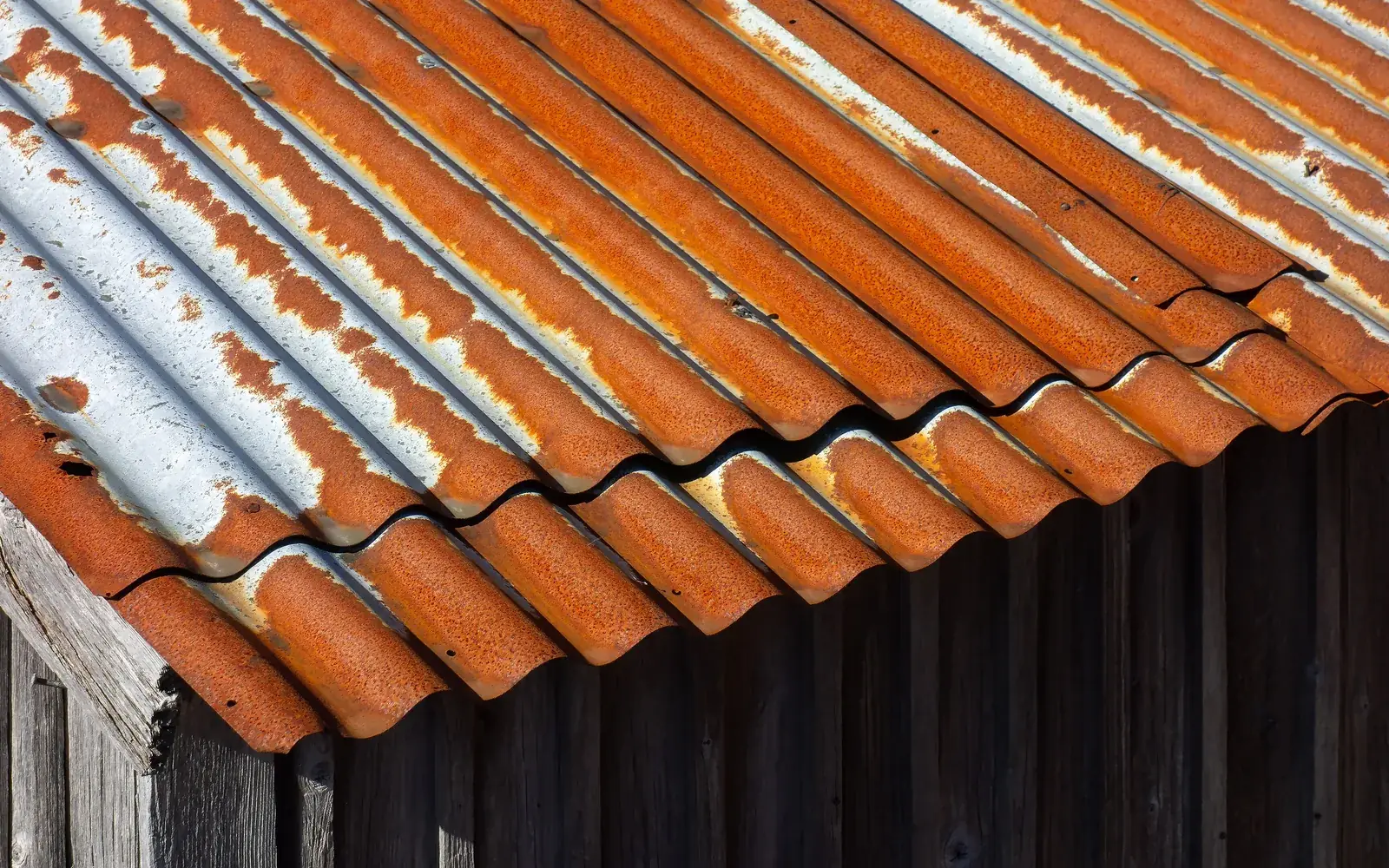
Rusted areas are cleaned and primed before they are sealed or coated (one coating maker requires every rusted area primed). Scratches and damaged paint are touched up, as a panel maker's manual calls for, and rusted-through metal is cut out and replaced.
RISE's metal roof repairs carry a 2-year warranty.
Three questions decide it: are the panels sound, how many details are failing, and is there rust you can't see?
| What the roof shows | Usual answer |
|---|---|
| A few leaks at screws, a lap, a pipe boot or a flashing; panels sound | Repair the failed details |
| Washers failing across the roof, laps and seams weathered, surface rust only; panels still tight | Repair, then coat (restoration) |
| Widespread rust-through, rust between panels or on the underside, many loose or damaged panels | Replace the roof |
A coating is not a fix for a failing roof. GAF's metal coating process starts with a roof that is clean, dry and tight, with sheet-metal repairs made and loose or missing fasteners secured or replaced. One coating maker's guide is blunter: hidden rust between panels or on the underside can't be fixed by a coating. If a building is past both, see metal building roof replacement or, for barns and shops, barn and shop metal roofing; for a house, start with metal roof cost.
When the panels are sound but the details are worn out everywhere, a restoration coating seals the whole surface in one job. RISE Roofing is a GAF CoatingsPRO roof coating contractor.
On any coating quote, ask for the coating thickness and the warranty term in writing; the thickness sets the term.
The Texas Department of Insurance (TDI) puts it plainly: metal roofs can dent or scratch from hail, wind-blown debris and falling branches, which might not affect performance but can hurt curb appeal. That is the line between cosmetic and functional damage.
TDI also warns that an insurer that lowers your premium for a metal roof may attach a cosmetic-damage exclusion, and that cosmetic coverage can change at renewal, so read your policy and talk to your agent.
RISE offers storm tarping during storms only; a tarp is not a fix for an everyday leak.
Inside TDI's catastrophe area (see Texas windstorm metal roofs), roof repairs under 100 square feet that don't involve the decking don't need a windstorm inspection, but most roof replacements and major repairs do (see TDI's windstorm inspection guide). RISE handles the permit paperwork, including city permits and the Texas windstorm (WPI-8) paperwork; TDI issues the certificate.
Please don't climb onto a metal roof to find a leak. NRCA (the National Roofing Contractors Association) tells homeowners and business owners to inspect only from ground level, because the risk of falling is too great without proper safety systems. Panel makers warn that metal panels can become slippery, and extremely slippery when wet. What you can check safely:
RISE also offers roof tune-ups; ask what one would cover on your roof.
It depends on what failed and how much of the roof needs work, so a repair is priced after an inspection. In Houston, a GAF restoration coating runs about $2.50–$4 per sq ft, against about $7.50–$15 per sq ft for a commercial re-roof.
Yes, if the panels are sound: leaking screws, laps, flashings and penetrations can be re-screwed, re-sealed or rebuilt. Replace the roof when rust-through is widespread, rust is hiding between panels or underneath, or many panels are loose or damaged.
Replace each failed screw with the next size up (a #12 becomes a #14) and a new washer, driven with a clutch or depth-setting screw gun so the washer isn't crushed. If washers are failing everywhere, re-screw the whole roof. Leave it to a roofer; metal panels get slippery.
Yes. Hail can dent or scratch metal panels. Damage that only changes the roof's looks is cosmetic; damage that lets water in or stops the roof keeping out the weather is functional. Some policies exclude cosmetic damage, so read yours and photograph the damage before any work.
No. A restoration coating is a system: the roof is cleaned and repaired, every fastener is encapsulated, ridges, rakes and penetrations are reinforced, and the coating goes on to a set thickness. On GAF systems, that thickness sets whether a 10, 15 or 20-year manufacturer warranty is available.
Leak in a Houston metal roof or metal building? Call (832) 345-9527 or send us the details. You'll get a written quote within 24–48 hours, price-locked once you sign.
Industry reference: Metal Roofing Alliance.
No waiting around for multiple contractors to come bid your roof. One quick call is all it takes.
Pick any slot that works for you — online and instant.
Free video or voice call. We answer your questions and gather what we need.
We email your price-locked quote — no pressure, no sales visit.
🔒 Free, no-obligation estimate — Price-locked in 24–48 hrs